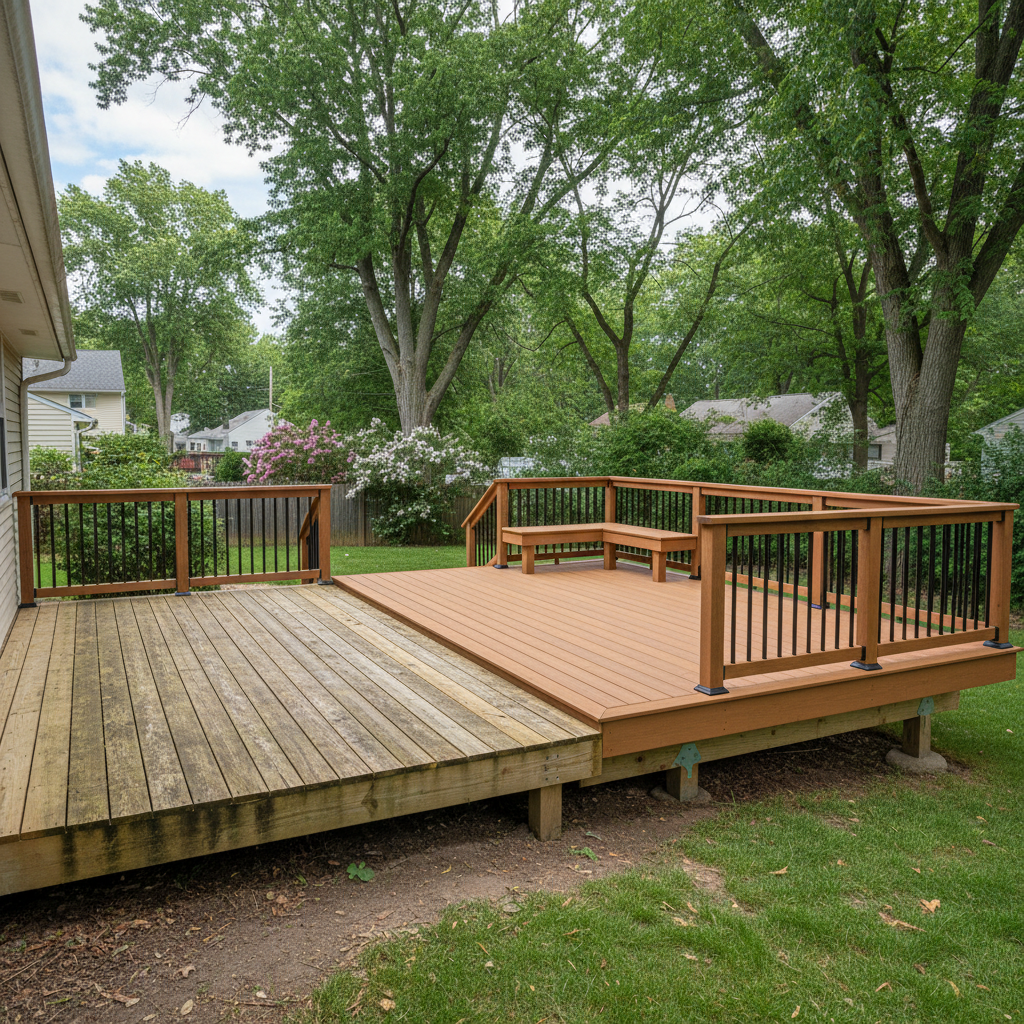
So, you're finally ready for that new deck, maybe to get the outdoor living space you've been dreaming about for your Hamden home. That's great! But before you even start looking at materials, there's a big decision to make: how will this thing actually get built? Most people don't even realize there are two main ways to approach it: the old-school stick-built method or a newer modular system. Let's break down what each means for you.
What's a Stick-Built Deck, Anyway?
When I talk about 'stick-built,' I'm referring to the classic way decks have been put together for generations. It means we bring all the lumber – the joists, beams, posts, and decking boards – to your property as individual pieces. We cut everything to size right there on site, assemble it, and build the deck from the ground up, piece by piece. Think of it like building a house with individual studs and planks, you know?
And What About Modular Decks?
Modular, sometimes called prefabricated, is a whole different animal. With these systems, a lot of the structural parts are made off-site in a controlled environment. Imagine a giant LEGO set for your backyard. Sections of the frame, sometimes even entire deck panels, show up at your home already cut, drilled, and ready to be put together. We still handle the final assembly and installation, but a good chunk of the 'building' happens before we even set foot in your yard.
Cost: Which One Hits Your Wallet Harder?
This is usually the first thing everyone asks, and honestly, it's not always a simple answer. Generally speaking, stick-built decks can sometimes look cheaper on paper for just the raw materials, especially if you're going with standard pressure-treated lumber. But here's the kicker: you're paying for more labor hours on site. We're cutting, fitting, and fastening every single piece by hand. Modular systems, while they might have a higher upfront cost for those manufactured components, often save you money on labor because the installation is much quicker and more efficient. Less time spent on site usually translates to lower labor costs. For a typical 12x16 deck in Hamden, especially if you're eyeing more complex designs or higher-end materials, the total cost can often balance out. Sometimes, it even favors modular slightly because of that reduced installation time.
Durability & Longevity: Built to Last?
Both methods, when done correctly by a reputable contractor like Midway Decking, can give you a very durable deck. The main difference often comes down to quality control. With stick-built, the quality of cuts and connections really depends on the crew's skill that day, and even the weather can play a role. With modular, those structural components are often built with incredible precision in a factory, which can lead to super consistent, strong joints and frames. Also, many modular systems use advanced fastening methods or materials that just aren't practical for on-site construction. For Hamden, where we deal with pretty harsh winters and humid summers, that factory precision can be a real benefit for long-term stability and resistance to warping or shifting.
Maintenance: What's the Upkeep?
Maintenance isn't really about *how* the deck was built; it's about *what materials* you chose. Whether it's stick-built or modular, if you pick wood, you'll have the same staining, cleaning, and occasional board replacement chores. If you go with composite decking on either system, your maintenance will be minimal – just a good wash now and then. So, this factor really comes down to your material choice, not the construction method itself.
Appearance & Design Flexibility
Here's where stick-built often shines, especially if you want something truly custom. Because we're building from scratch, we can easily handle odd angles, curves, multi-level designs, or blend it perfectly with existing structures, like a quirky foundation on an older Spring Glen home. It's completely bespoke. Modular systems are definitely getting better, offering a wide range of sizes and configurations, but they still work within a set of pre-engineered parameters. If you want a very standard rectangle or square deck, modular can look fantastic and be incredibly efficient. But if you have a unique vision or a challenging yard, stick-built usually gives you more design freedom.
Installation Time: How Fast Can You Be Decking?
This is a big one for many homeowners, isn't it? Modular systems almost always win here. Since so much of the work happens off-site, the actual time we spend in your backyard is significantly cut down. This means less disruption to your daily life, less noise, and you're enjoying your new deck sooner. Stick-built takes longer because every cut, every screw, every connection happens at your home. If you're in a hurry to get that deck ready for summer, modular can be a real advantage.
My Recommendation for Hamden Homeowners
Look, both are solid options, and what's best for you really depends on your priorities. If you're on a tight budget and want a very specific, unique design that isn't a standard shape, or you just prefer the traditional craftsmanship, a stick-built deck is probably the way to go. You'll get exactly what you want, built by hand. However, if you value speed of installation, consistent quality, potentially lower overall labor costs, and your design fits within common parameters, I'd lean towards a modular system. Especially with our New England weather, the factory precision of modular components can offer a real advantage for long-term stability and fewer issues down the road. It's a modern approach that just makes a lot of sense for many folks these days.