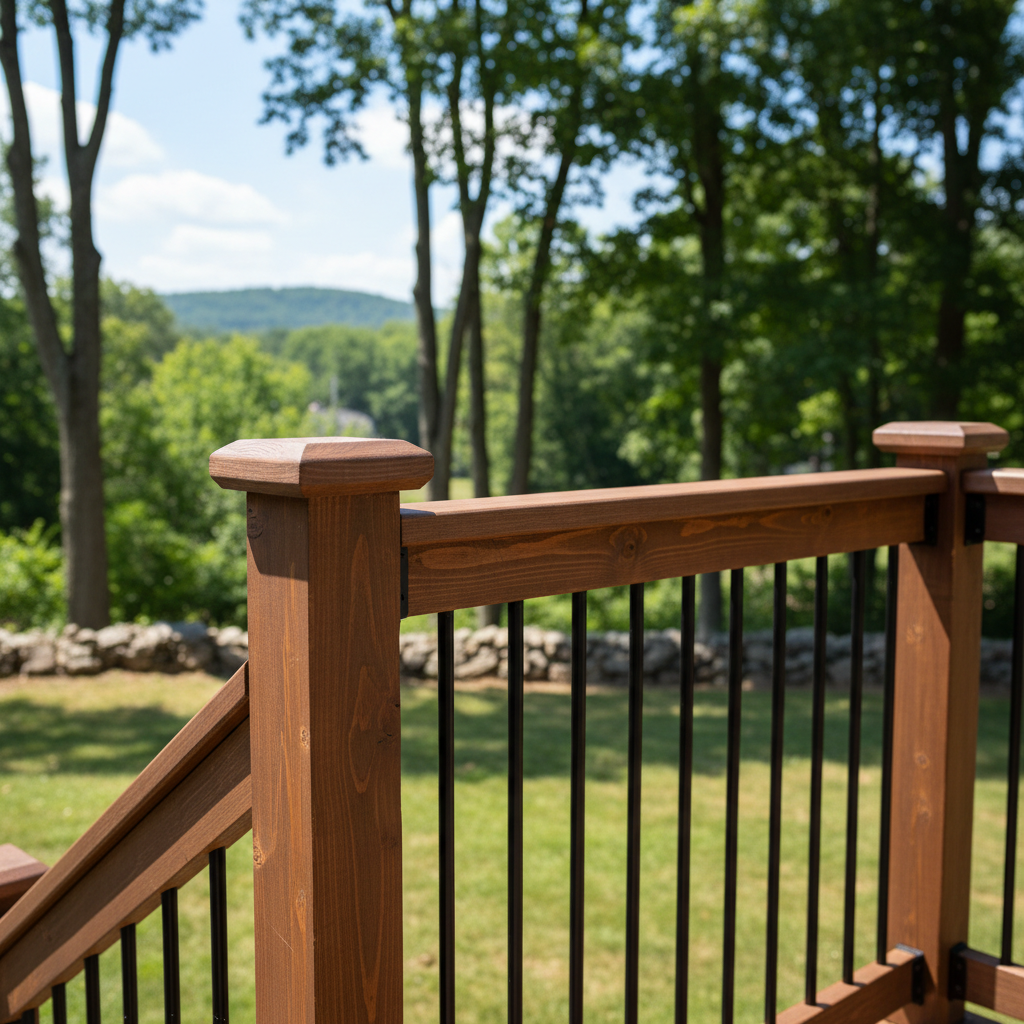
When you look at your outdoor space and try to figure out what to do with the edges, railings are usually the detail that ties the whole project together. Over years of building and servicing outdoor spaces right here in New Haven County, Midway Decking gets asked many questions about what works, what lasts through our freezing winters, and what keeps the local inspectors happy. Midway Decking sees every kind of setup imaginable. Here are straight answers to the most common questions homeowners ask about Deck Railing Installation in Hamden.
Do I actually need a railing on my deck in Hamden?
That depends entirely on how high your deck sits off the ground. If the walking surface of your deck is more than 30 inches above the grade below, local building codes enforced right here in town require a guardrail. If your deck is lower than that 30-inch threshold, a railing is not legally mandatory, though plenty of homeowners still add Deck Railing Installation for safety, defining the space, or giving people something to lean against.
How tall do my deck railings need to be?
For standard residential single-family homes around town, the code mandates a minimum height of 36 inches, measured from the finished deck surface to the top of the rail. If you are building stairs, the graspable handrail needs to sit between 34 and 38 inches above the stair nosing. Always double-check with the Hamden building department before starting, because code interpretations can occasionally shift depending on the specific inspector or unique property layouts.
What materials hold up best against New England weather?
We deal with freezing winter slush, heavy spring rains, and scorching summer humidity right here in Connecticut. Wood looks classic, but traditional pressure-treated lumber requires constant staining and sealing to keep from splitting or rotting. Aluminum and composite Deck Railing Installation systems have become very popular because they practically ignore the weather. They will not rust, warp, or splinter, meaning you spend your weekends relaxing instead of painting.
Can I mount railings directly to composite decking boards?
Yes, but you cannot just screw them into the thin plastic shell of your deck boards and hope for the best. The structural posts must be bolted securely into the underlying wooden or metal framing of the deck. If your posts only grab the decking boards, the whole railing will wobble and fail a safety load test. Midway Decking always blocks out the framing underneath during construction to give those posts a rock-solid anchor.
What is the rule on spacing between balusters?
Safety codes are strict about gaps to prevent small children from slipping through or getting stuck. Whether you are using vertical pickets, glass panels, or horizontal cable systems, no opening anywhere on the Deck Railing Installation can allow a 4-inch sphere to pass through. That 4-inch rule is checked closely during final inspection, so proper installation spacing is very important.
Are cable railings a good choice for Hamden homes?
Cable railings look sleek and keep your backyard sightlines wide open, especially if you back up against a wooded lot or a nice yard. They handle temperature swings well, but stainless steel cables do require occasional tension adjustments as seasons change and materials expand or contract. They also tend to cost more upfront than standard vinyl or aluminum picket systems, but the modern look is usually worth the cost for homeowners wanting an unobstructed view of Hamden.